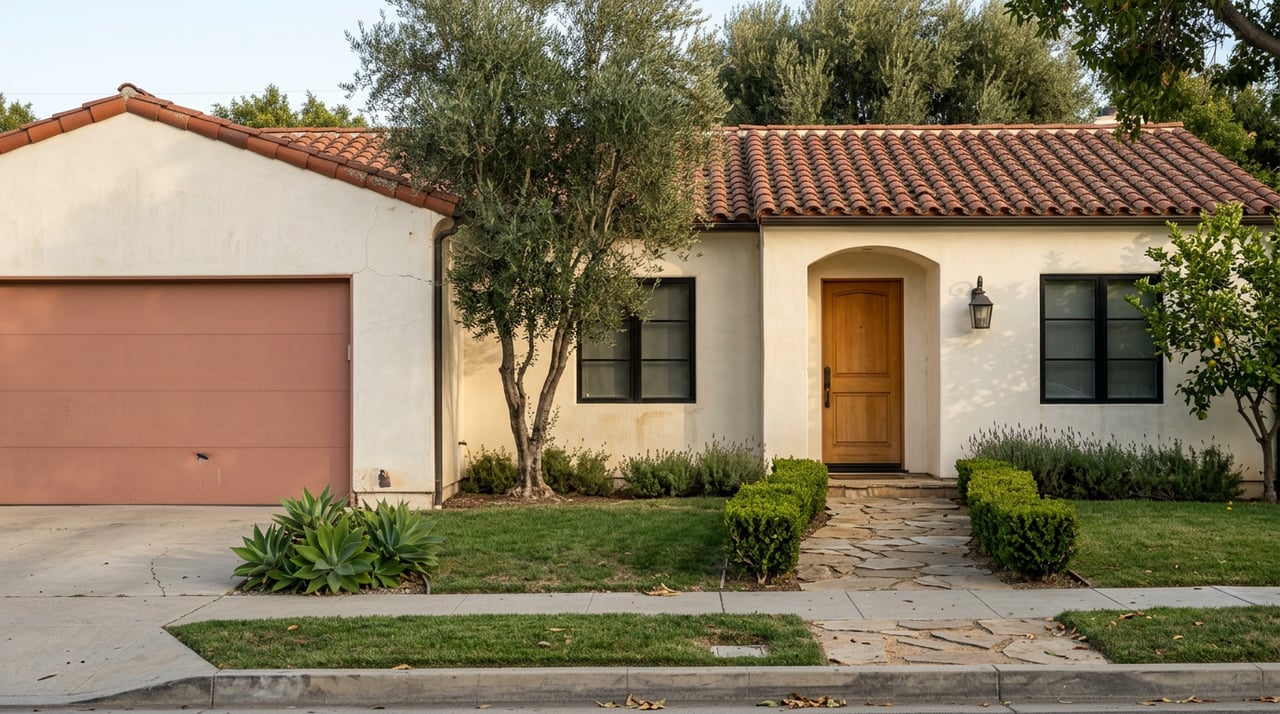
In Hacienda Heights, There's No City Hall to Call About That Unpermitted Room
August 13, 2026
August 13, 2026
Say you're selling a house on one of the ranch-style streets off Stimson Avenue, the kind built in the 1950s and quietly expanded twice since. A converted garage in the 1980s. A patio room enclosed sometime in the 1990s. Nobody pulled a permit for either, and the house has sat this way for thirty years without incident.
The instinct, once you decide to sell, is to treat this like a paperwork problem: call the city, get it permitted, move on. That instinct fails in Hacienda Heights for a reason most sellers don't learn until they're already in escrow. There is no city. Hacienda Heights is unincorporated, which means every one of those permits, retroactive or otherwise, has to go through a single countywide agency that has no particular reason to move faster for you than for a similar house in Altadena or East Rancho Dominguez.
That single fact changes which of the three normal options for unpermitted work actually make sense on a seller's timeline.
Whittier has a building department. La Puente has a building department. Hacienda Heights doesn't, because it was never incorporated as its own city. Permits here are issued and inspected by LA County Public Works Building and Safety, the same office that handles construction review for unincorporated pockets across the entire county, through its online portal, EPIC-LA. If your property sits in unincorporated LA County, that office issues your permit, full stop, according to the county's own homeowner guidance.
That matters more than it sounds like it should. A city building department answers to a city council that hears from residents when review times get slow. A county department serving dozens of unincorporated communities has no equivalent local pressure specific to Hacienda Heights. Your plan check for a garage conversion competes for review time with every other unincorporated project in the county's queue, not just the ones on your block.
Once a permit is issued, the county's rules are specific about how fast you have to move: an inspection request is required within 12 months of issuance or the permit expires, and if the project sits idle for more than 180 days at any point, it expires again. That's not a Hacienda Heights quirk. It's the standard county timeline, and it applies whether your house sits on a flat lot near Colima Road or up a hillside grade near Turnbull Canyon.
Hacienda Heights didn't get its unpermitted-work problem from neglect. It got it from generosity of lot size. The tract homes built between the 1950s and 1980s near landmarks like Wedgeworth Elementary and Newton Park sit on lots wide enough to invite additions that a smaller urban lot would never accommodate. Garage conversions on the wider lots south of Gale Avenue. Kitchen expansions in the older tracts. Bathroom overhauls in the ranch homes near Los Altos Drive. On the hillside side, near Hsi Lai Temple and Hacienda Boulevard, larger parcels support two-story additions and grading work that requires its own layer of county review because of slope.
None of that is unusual for a San Gabriel Valley community with this housing stock. What's unusual is that every one of those additions, whenever the current owner or a past owner skipped the permit step, routes through the same countywide office rather than a local desk that knows the neighborhood's grading patterns and lot sizes on sight.
Every seller who discovers or already knows about unpermitted work faces the same three choices. What changes in Hacienda Heights is how realistic each one is on a normal selling timeline.
| Path | What it actually requires | Effect on your buyer pool |
|---|---|---|
| Legalize it | Plan check submission to LA County Public Works, not a city desk. Standard county review cycles run roughly 8 to 16 weeks before you even get to inspection, longer if corrections are needed. | Widens the pool once complete. Adds appraised square footage for FHA and VA buyers. |
| Disclose and price as-is | Complete and accurate Transfer Disclosure Statement and Seller Property Questionnaire. No permitting delay. | Narrows the pool to cash buyers and investors, since lenders won't count unpermitted square footage toward appraised value. |
| Remove the addition | Demolition of the non-permitted structure or portion. | Restores the home to its permitted baseline but costs money and living space upfront. |
The as-is path is the one that closes fastest, sometimes in 30 to 45 days with the right buyer, precisely because it skips the county queue entirely. It's also the path that most limits who can buy the house, because FHA and VA underwriting won't include unpermitted rooms in the appraisal, which pushes financed buyers out of contention.
Legalizing is the better long-term outcome when the timeline allows it. But "when the timeline allows it" is doing real work in that sentence. A city building department reviewing a straightforward garage conversion might turn it around inside a month. LA County Public Works, working through the same queue that serves every unincorporated community it oversees, does not offer that speed as a baseline expectation.
Whichever path you choose, the disclosure obligation doesn't change. California's Transfer Disclosure Statement law, codified at Civil Code Section 1102, requires sellers to disclose known unpermitted additions, alterations, or repairs. This applies even if you didn't do the work yourself. If a previous owner converted the garage and you've simply lived with it, you still have to disclose what you know.
Selling as-is doesn't remove this duty either. An as-is sale limits what repairs a buyer can demand. It does not limit what you have to tell them. Concealing known unpermitted work exposes a seller to liability under Civil Code Section 1710, California's fraud-by-concealment statute, and that exposure survives closing. A buyer who discovers unpermitted work after the fact can bring a claim years later.
The safest version of disclosure is specific, not vague. "Garage converted to family room, year unknown, no permit on file" protects you far better than checking a box and moving on.
Hacienda Heights isn't a slow market where sellers have room to figure this out mid-escrow. Over the three months ending in May 2026, homes here sold in around 36 days on average, received roughly two offers each, and closed at a median price of $1.0 million, up 2.9 percent from the same period a year earlier, according to Redfin's tracking of the local market. Multiple offers and fast closings sound like good news, and mostly they are. But they also mean a buyer's inspector is going to find that converted garage or that patio room quickly, and you want to have already decided your path before that inspection report lands.
Before you list, pull the county's permit record for your own address through EPIC-LA, so you know exactly what's on file and what isn't. If you're leaning toward legalizing, get a written estimate from a licensed contractor on both cost and realistic timeline before you commit to that path publicly. If you're leaning toward disclose-and-price-as-is, talk to your agent about how the discount should be reflected in your list price so the right buyers self-select instead of walking away in week two.
Does Hacienda Heights have its own building department? No. Hacienda Heights is unincorporated Los Angeles County, so all building permits, plan checks, and inspections go through LA County Public Works Building and Safety, not a city agency.
If my buyer's inspector doesn't catch the unpermitted work, do I still have to disclose it? Yes. California's disclosure law is based on what you know, not on what an inspector happens to find. If you're aware of unpermitted work, it belongs on the Transfer Disclosure Statement regardless of whether anyone else discovers it independently.
Is adding an ADU the same process as legalizing an old addition? They both route through the same LA County Public Works office, but a new ADU is a fresh permit application rather than a retroactive one. Ground-up ADU construction in this area has generally run somewhere between $150,000 and $350,000 depending on whether it's a garage conversion or a detached build, which is a separate cost conversation from legalizing an existing unpermitted room.
If you're weighing whether to legalize, disclose, or remove before you list a Hacienda Heights home, that decision is easier with someone who's walked other sellers through the same three-way fork. Rene & Andrea Realty can talk through your specific situation and help you price it right either way. Get a free home valuation. Call or text Rene & Andrea today.
Stay up to date on the latest real estate trends.
We specialize in Whittier, but work throughout Southern California. Our cell phones are always available. Please feel free to call/text/email us if we can be of any assistance to you.