The Sewer Lateral Problem That Blindsides Sellers in Uptown Whittier and Penn Park
August 13, 2026
August 13, 2026
Escrow was supposed to close in twelve days. Then the buyer's inspector ran a camera down the sewer line and found root intrusion at two joints in original clay pipe. The seller had lived in the house for eleven years and never had a plumbing problem worth mentioning. The buyer's lender wanted the issue resolved before funding. Nobody had budgeted for it, because nobody had looked.
That scenario plays out more often in specific pockets of Whittier than almost anywhere else in the southeast Los Angeles suburbs, and the reason has nothing to do with how well the house shows or how the market is performing. It has to do with what's underground, how old it is, and a gap in local rules that most sellers never think to ask about until a buyer's inspector finds it for them.
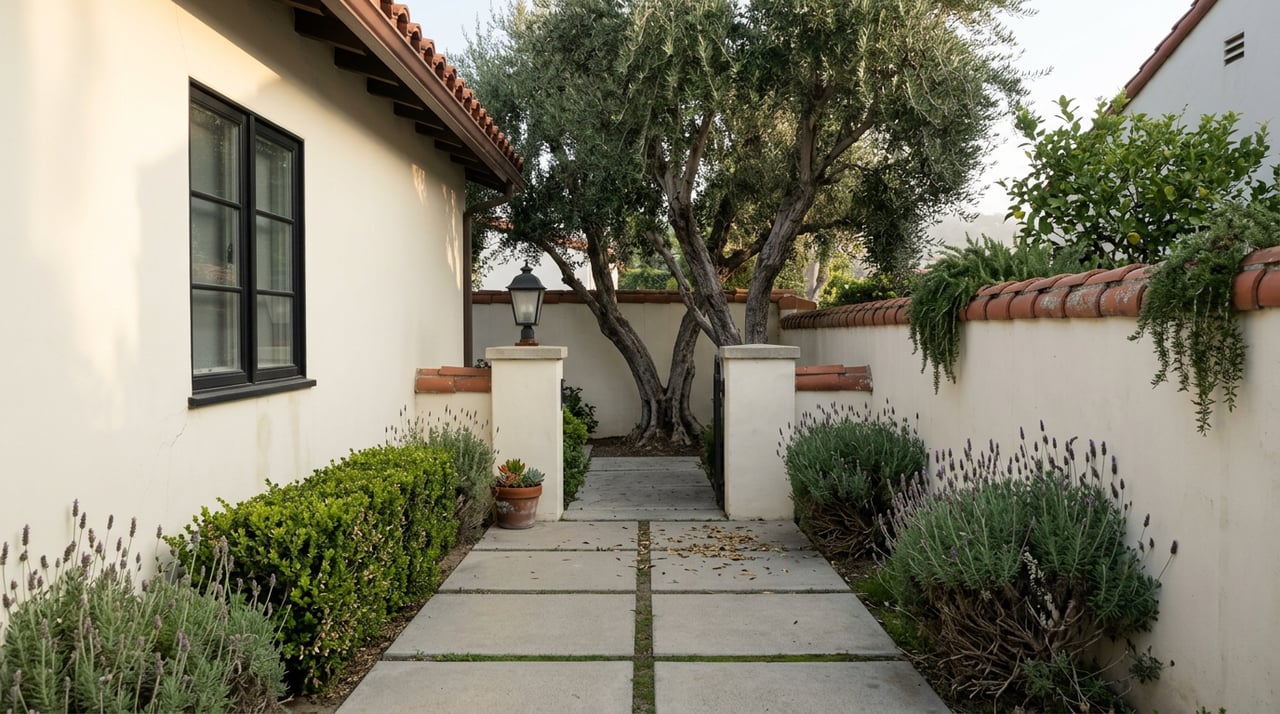
Whittier carries some of the oldest housing stock in the area, and a handful of neighborhoods concentrate that age more than others. Penn Park, Uptown Whittier, and the Greenleaf Avenue corridor still have original clay sewer laterals dating to the 1910s through the 1950s that have never been replaced. Those aren't isolated addresses. The city's own historic districts confirm just how much of the housing stock in this part of town predates modern plumbing materials: the Hadley-Greenleaf district covers more than 190 individual properties built between 1904 and 1926, College Hills was subdivided in 1923 as the city's first planned hillside development, and Earlham represents homes built between 1903 and 1940. Add the roughly 100 individually designated historic landmarks scattered across the city, and you have a large share of Whittier's housing built during exactly the decades when clay pipe was standard practice.
Clay pipe wasn't a poor choice for its era. It just wasn't built to last a century. Joints separate, roots find the seams, and sections settle unevenly as soil shifts over 70 to well over 100 years, depending on when the specific lateral went into the ground. A correctly installed replacement lateral, by contrast, is engineered for 50 to 100 years of service. That's the real timeline at play here. Homes in these neighborhoods aren't overdue for a plumbing problem because of bad luck. They're overdue because the pipe in the ground has already outlived its own design life in a lot of cases.
Here's the part that catches people off guard. In Whittier, the homeowner is responsible for maintaining and repairing the entire sewer lateral from the house to the city's main line, and a video inspection is required before the city will issue certain permits. That requirement is tied to the permit, not to the sale of the home.
Some cities do it differently. Hillsborough, San Mateo, and Burlingame in the Bay Area all require a sewer lateral inspection or compliance test before a property can close escrow. Contra Costa County's sanitary district goes further, requiring a certificate before the sale finalizes, with an application window that closes the moment escrow does. Whittier has no equivalent trigger. If a seller never pulls a permit that requires a lateral scope, and never has a plumbing problem serious enough to call someone out, the pipe can sit unexamined for decades, through multiple owners, right up until a buyer's home inspector orders a camera inspection during their contingency period.
That means the first person to actually look at a century-old clay lateral in Uptown Whittier is often the buyer, on the buyer's schedule, using the buyer's inspector, at the exact moment in the transaction when the seller has the least leverage to control the story.
Once a lateral fails inspection, the range of outcomes is fairly well established. A licensed contractor can typically spot-repair a single failed section for $1,500 to $5,000. A full trenchless replacement, which avoids tearing up a yard or driveway, generally runs $80 to $250 per linear foot in California. A complete replacement project, including permits and any surface restoration, lands anywhere from $5,000 to $25,000 or more depending on how long the run is, how deep it sits, and whether it crosses under a driveway or sidewalk instead of open lawn.
| Scope of Work | Typical Cost |
|---|---|
| Spot repair, single section | $1,500 to $5,000 |
| Trenchless replacement | $80 to $250 per linear foot |
| Full replacement, all-in | $5,000 to $25,000+ |
None of those numbers are catastrophic on their own. A seller who knows the range going in can plan around it. The problem is almost never the dollar figure. It's the timing.
Whittier's resale market has stayed fast through the first half of 2026. Single-family homes have generally traded in the $850,000 to $900,000 range, and listings have been going pending in a little over a month on average. That pace tells buyers and sellers the market rewards a clean, well-priced, move-in-ready home. It also masks a quieter number: close to one in seven Whittier listings still take a price cut before they sell.
A five-figure sewer repair discovered during a buyer's contingency period is exactly the kind of thing that pushes a listing into that group. The buyer isn't walking away because the pipe is bad. They're negotiating hard because they found something the seller didn't put on the table first, and in a transaction, information asymmetry is leverage. What actually costs a seller money isn't the repair itself. It's the week or two of renegotiation, the lender's clock still running, and the buyer's agent now treating every other line item in the inspection report with the same suspicion.
A seller who orders a scope before listing and prices or discloses accordingly walks into escrow with the same information the buyer would eventually find anyway, just on their own terms instead of the buyer's.
Does every older home in Whittier have this problem? No. Age and location raise the odds, particularly in Penn Park, Uptown Whittier, and along the Greenleaf Avenue corridor, but a lateral's actual condition depends on the specific pipe, the soil, and whether any prior owner already replaced it.
Who typically pays for repairs found during escrow? There's no fixed rule. It's a point of negotiation between buyer and seller, and the outcome usually depends on how early the issue surfaces and how prepared the seller is to respond.
Does this apply to newer construction in Whittier too? Less often. Homes built after the 1980s are more likely to have modern PVC or ABS laterals, which don't carry the same age-related risk as the clay pipe common in the city's older neighborhoods.
Selling a home in a neighborhood this old comes with details that don't show up on a listing photo. If you own a home in Uptown Whittier, Penn Park, or anywhere along the Greenleaf corridor and you're weighing whether to list, Rene & Andrea Realty can walk you through what a pre-listing scope actually involves and what it might mean for your price. Get a Free Home Valuation — Call or Text Rene & Andrea.
Stay up to date on the latest real estate trends.
We specialize in Whittier, but work throughout Southern California. Our cell phones are always available. Please feel free to call/text/email us if we can be of any assistance to you.