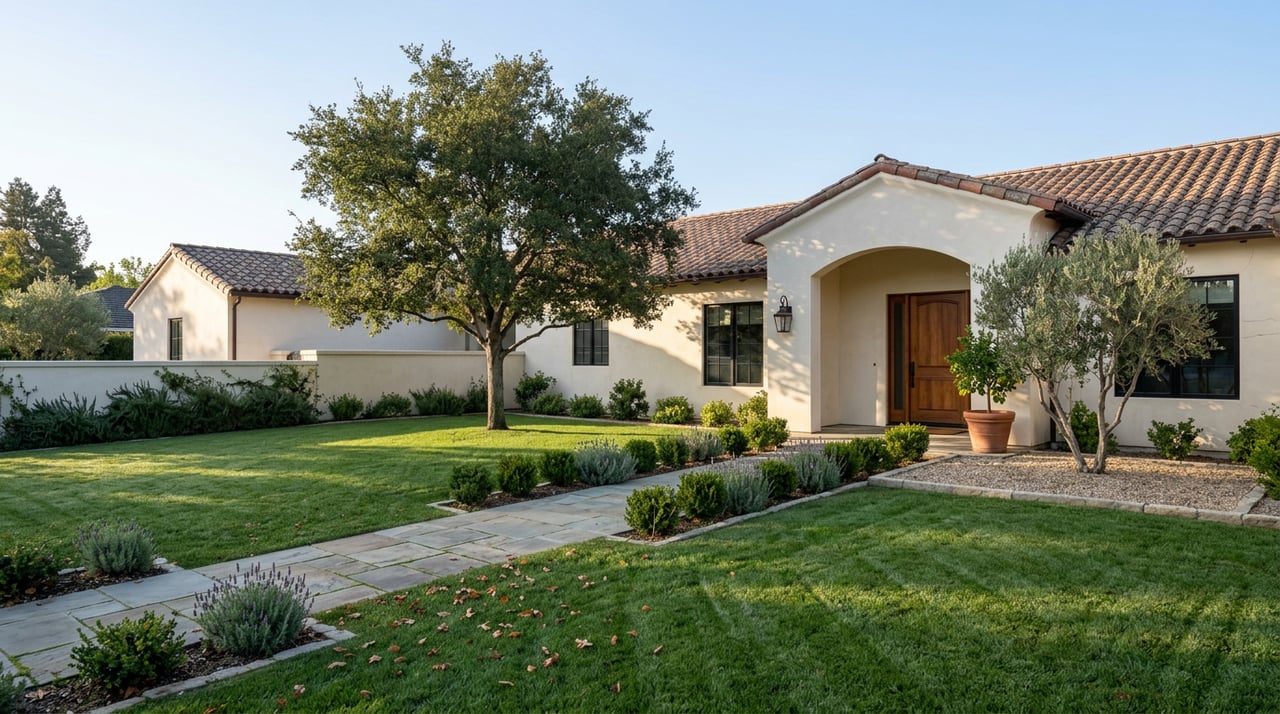
The La Puente Listing With Four Horse Stalls Was Never Approved By La Puente
September 10, 2026
September 10, 2026
Scroll through La Puente listings long enough and the pattern breaks. One home sits on a flat 6,545-square-foot lot, four bedrooms, fresh paint, a fairly ordinary tract profile for the San Gabriel Valley. A few streets over, another listing carries the same city name on the sheet: five bedrooms, a half-acre lot, a pool and spa, four horse stables, and a guest house doing double duty as two more bedrooms. Same mailing address. Same portal search radius. Completely different rulebook underneath.
That second home almost certainly isn't inside the city of La Puente at all. It's in Avocado Heights, an unincorporated pocket of Los Angeles County that borrows La Puente's name for its mail but answers to LA County Regional Planning, not city hall. Knowing which government actually holds the zoning file on a given parcel changes what a buyer can build, keep, or subdivide, and it's the detail that a citywide median price will never surface.
Avocado Heights spans about 2.5 miles and sits wedged against the City of Industry to the north and east, unincorporated Hacienda Heights to the south, and the San Gabriel River and Interstate 605 to the west. It's one of 24 unincorporated communities inside LA County's East San Gabriel Valley Planning Area, which means the county's zoning code governs it, not the incorporated City of La Puente's own municipal ordinance.
That distinction matters more here than in most swapped-address suburbs. The incorporated city runs a fairly standard R-1 single-family zone, capped around seven units per acre, with its own accessory dwelling unit rules written into city code. Avocado Heights runs on a different set of designations entirely, including a modified agricultural zone that most incorporated cities in the county phased out decades ago.
The mechanism goes back to 1991, when the county formally designated Avocado Heights one of its Equestrian Districts, a status held by only seven areas countywide. Outside an Equestrian District, unincorporated LA County requires roughly 15,000 square feet for a single horse, with another 5,000 square feet required for each additional animal. Inside the district, the minimum lot size needed to stable horses at all drops to about 930 square meters, roughly 10,000 square feet, a threshold low enough that a half-acre lot with a pool and a guest house still has room left over for stalls, something a same-sized lot outside the boundary couldn't legally support.
Here's how the same address ends up under different rulebooks depending on which side of an invisible line it sits on:
| Where the parcel sits | Who governs it | Horse-keeping minimum |
|---|---|---|
| Incorporated City of La Puente | City of La Puente zoning ordinance | Not a standard use; horses generally not accommodated in R-1 |
| Avocado Heights, inside the Equestrian District | LA County Regional Planning | About 930 square meters (roughly 10,000 sq ft) minimum lot size |
| Avocado Heights, outside the Equestrian District | LA County Regional Planning | 15,000 sq ft minimum for the first horse, plus 5,000 sq ft per additional horse |
Pellissier Village, a smaller equestrian pocket across the 605 that's often lumped in with Avocado Heights in casual conversation, already carries its own standard R-A and R-1 zoning rather than the district's agricultural designation. County planners confirmed during the 2023 rezoning process that Pellissier Village's zoning wasn't part of the proposed changes at all, which is its own wrinkle worth checking parcel by parcel rather than assuming from the neighborhood name.
As of March 2026, the median home price in Avocado Heights sat at $764,500, with sales ranging from $675,000 up to $1,295,000 and a typical 31 days on market. Across the broader city of La Puente, sales tracked over the twelve months ending in August 2026 put the citywide median at $700,000, with the middle half of all closings falling between $605,000 and $765,000.
Line those two numbers up and the story gets sharper. Avocado Heights isn't pricing like a slightly nicer pocket of La Puente. It's pricing at the very top edge of what the entire citywide market pays for anything, sitting almost exactly at the 75th percentile ceiling of the whole city's twelve-month range. A five-bedroom house with a guest unit and stables isn't earning that premium because the kitchen is nicer. It's earning it because the zoning underneath the house allows uses the rest of the city can't touch: horses, small orchards, sometimes room for a second household on the same parcel.
That distinction cuts both ways for buyers. A large Avocado Heights lot with agricultural roots can also attract more than horse owners. LA County approved Tentative Tract Map No. TR82860 for a parcel on South Coberta Avenue, splitting roughly 0.82 net acres into five separate single-family lots, an entitlement that only exists because the underlying land was large enough and zoned in a way that supported subdivision. The same large-lot zoning that makes room for a barn also makes room, with the right approvals, for more houses.
None of this settled quietly. In 2023, LA County proposed rezoning much of Avocado Heights as part of a broader planning update, and residents organized as Avocado Heights Vaquerxs pushed back hard. Their president told Streetsblog LA that "agricultural zoning is very rare," and the group worried openly that developers would eye the community's larger lots for industrial manufacturing or luxury condos once agricultural protections lifted.
County planners countered that most of the proposed changes targeted parcels that had been zoned agricultural on paper since the 1950s and 60s even though they'd functioned as ordinary residential subdivisions for decades, and that the Equestrian District itself would keep its horse-keeping rights regardless of how the surrounding parcels got reclassified. The full plan, known as the East San Gabriel Valley Area Plan, was adopted by the Board of Supervisors on May 21, 2024 and took effect June 20, 2024.
For a buyer today, that timeline matters. The zoning map underneath Avocado Heights is no longer a live proposal working its way through hearings. It's an adopted plan just over two years old, which means a title report or zoning verification pulled now reflects settled boundaries rather than a pending fight that could still swing either direction.
A few checks are worth doing before assuming any La Puente-adjacent listing plays by the rules the listing photos suggest:
Is Avocado Heights actually part of the city of La Puente? No. It's an unincorporated LA County community that shares La Puente's mailing address (and, on its northern edge, the City of Industry's), but it's governed by LA County Regional Planning rather than city government.
Does every horse property with a La Puente address sit inside the Equestrian District? Not automatically. The district has a mapped boundary, and nearby Pellissier Village carries separate base zoning. Confirm the specific parcel rather than assuming from the neighborhood name alone.
Did the 2024 area plan eliminate horse-keeping rights in Avocado Heights? No. County officials said throughout the process that the Equestrian District's horse-keeping standards would remain intact. The rezoning mainly reclassified parcels outside the district that had carried outdated agricultural designations since the 1950s and 60s.
Can these large lots actually be subdivided? Yes, with county approval. A five-lot tentative tract map was approved on a sub-acre Avocado Heights parcel on South Coberta Avenue, showing the process is available to owners and investors who pursue it through the right channel.
Comparing La Puente to its neighbors on price alone will always miss this. The number that shows up on a portal search is an average of two different rulebooks pretending to be one market. If you're weighing a horse property, a large-lot investment, or just want to know which government actually holds the file on a specific address, Rene & Andrea Realty can pull the parcel record and walk you through what it really allows before you write an offer. Call or text for a free home valuation and a straight answer on what the zoning underneath any La Puente-area listing actually says.
Stay up to date on the latest real estate trends.
We specialize in Whittier, but work throughout Southern California. Our cell phones are always available. Please feel free to call/text/email us if we can be of any assistance to you.